Asterion in the workshop: how I use Hermes Agent to maintain this blog
Asterion in the workshop: how I use Hermes Agent to maintain this blog
TL;DR: this blog is no longer just a static website. I am starting to treat it as a living system: I write ideas, test changes, and use Hermes Agent —my local agent, Asterion— to help maintain the garden, open PRs, and turn conversations into publishable content.
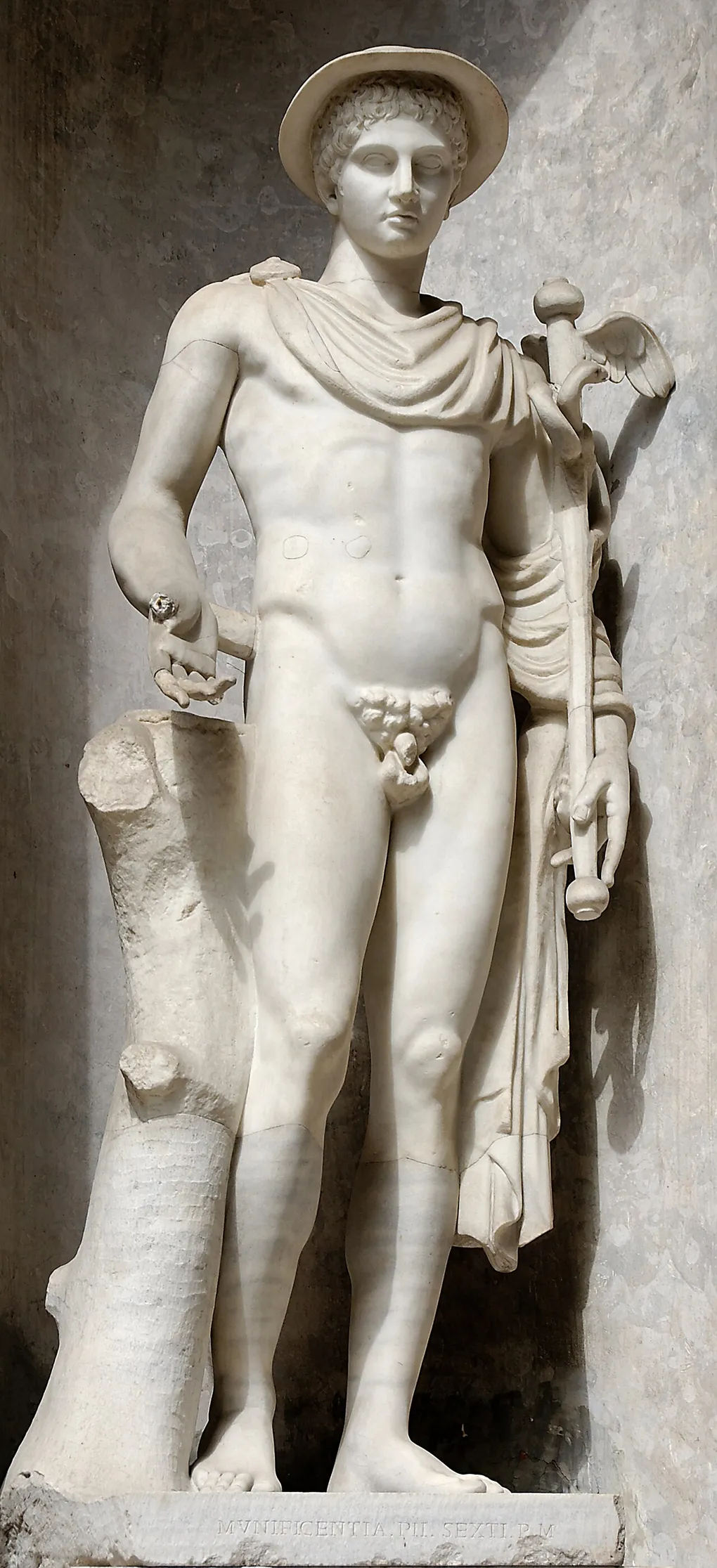
Cover image: Hermes Ingenui, public domain via Wikimedia Commons.
There is a part of having a blog that looks romantic from the outside and very mechanical from the inside: updating dependencies, fixing copy, checking builds, opening pull requests, seeing whether Cloudflare deployed correctly, remembering what changed and why.
For a long time I thought of the blog as a showcase: you write something, publish it, and it stays there. But I am increasingly drawn to a different idea: a personal blog can work as a workshop. A place where ideas are still growing, where content is corrected through use, where a note can begin as a seed and become more solid later.
That is where Hermes Agent comes in.
What Hermes Agent is for me
I am not using Hermes Agent as a loose chatbot in a browser tab. I am configuring it as a personal agent that runs on my Mac and that I can talk to from Telegram.
In my case, I gave it a name: Asterion.
The difference is not just aesthetic. Because it is connected to my local environment, Asterion can do concrete work:
- clone or update the blog repository;
- create branches;
- edit Markdown, Astro, or JSON files;
- run
npm run checkandnpm run build; - open pull requests on GitHub;
- verify whether Cloudflare Pages passed;
- leave notes or summaries in Obsidian.
That changes the feel of the work. It is no longer “I ask an AI how it would do something”, but rather “I work with an assistant that can do part of the real maintenance with me”.
The blog as an agent laboratory
This site is built with Astro and shaped like a digital garden. That combines very well with an agent, because much of the work is not only writing new pages, but maintaining connections:
- tags;
- backlinks;
- translations;
- recent notes;
- metadata;
- RSS;
- content structure.
A human can do all of that, of course. But it is also the kind of maintenance that becomes friction: small, repetitive, and easy to postpone.
The bet is that Asterion can help me reduce that friction. If an idea appears in a conversation, an Obsidian note, or an experiment with Swift, the natural next step could be turning it into an entry in the garden.
Not as perfectly polished content from minute one, but as a seed planted in the right place.
What I have already done with Asterion
The first step was fairly humble: technical maintenance.
Asterion prepared a branch, updated the project README, added an Astro check command, fixed type-check errors, and opened a pull request. Then it verified the build and deployment.
It is not a spectacular demo, but it matters: before asking it to write or reorganize ideas, I need to trust that it can touch the project without breaking it.
The second step was more visible: adjusting the main homepage copy so it better reflects what I am trying to build:
I build Swift tools with Spec-Driven Development to turn plant-floor knowledge into useful apps for process engineers.
That sentence captures the direction of the blog quite well: process engineering, software, local AI, Swift, and a more disciplined way of turning ideas into products.
Why this matters to me as a process engineer
I come from process engineering, where many real improvements come from understanding the system before touching it. If a plant fails, “trying things” is not enough: you observe, measure, form hypotheses, intervene, and verify again.
With software, I am trying to apply a similar logic. That is why I am interested in Spec-Driven Development: describing what should be built before building it, making constraints explicit, and preventing code from becoming just a pile of impulses.
An agent like Asterion can fit nicely into that flow:
- we discuss the intent;
- we write a specification or a note;
- we make a small change;
- we run checks;
- we open a PR;
- we keep a record of what we learned.
It is almost a continuous-improvement routine applied to the blog.
What I want to explore next
This post is a first marker on the path. Some ideas I want to try:
- having Asterion turn technical conversations into draft notes;
- asking it to review old posts and suggest internal links;
- detecting notes without translations or with incomplete metadata;
- helping me maintain a blog changelog;
- using Obsidian as the staging area before publishing;
- making the blog a public interface for my learning process.
I do not want the agent to replace my voice. On the contrary: I want to use it to support the invisible work that allows a voice to keep showing up over time.
Closing
I like to think of Asterion as a mix of librarian, workshop assistant, and technical companion. It does not write the path for me, but it can help me leave breadcrumbs, organize tools, and remember where we were.
If this blog works like a garden, Hermes Agent is a way of having someone watering it with me.
More to come.